A great find by club member ‘Digging History With Jay’ on the second of three Cowden digs last Saturday!
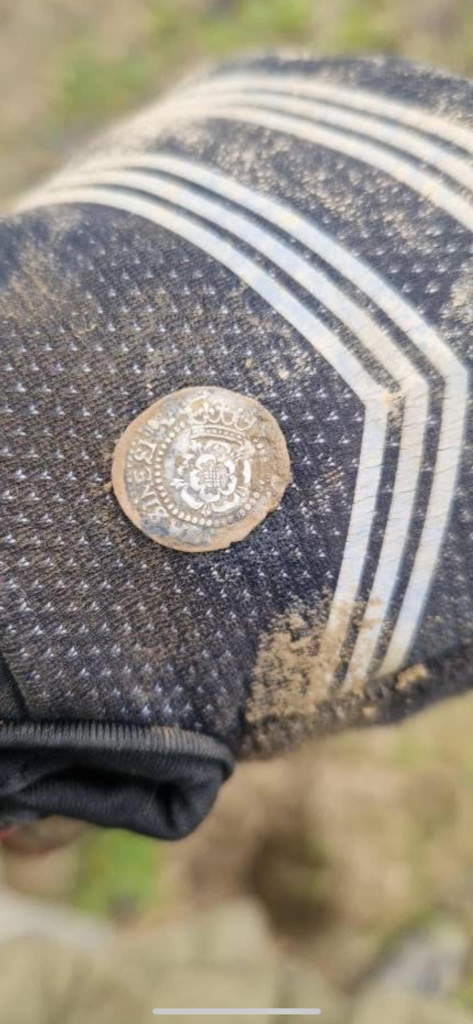

The history of British coinage is a fascinating journey through time, filled with intricate designs, symbols of power, and the influence of monarchs. One such piece, often overlooked by collectors and history enthusiasts alike, is the half groat of James I, a coin that tells a story of early 17th-century England and the reign of one of its most intriguing monarchs.
What is a Half Groat?
Before delving into the specifics of the James I half groat, it’s important to understand what a half groat actually is. The groat itself was a silver coin that originated in the medieval period and was equal to four pence. The half groat, as the name suggests, was worth half of this amount, making it two pence in value. These coins were used extensively during the reigns of various English monarchs, particularly in the late Middle Ages and early modern period.
The half groat was not only a practical form of currency, but also a reflection of the economy and the status of the monarchy. The design of the coin often included portraits of the reigning monarch, accompanied by Latin inscriptions, and various symbols that conveyed the monarch’s authority.
James I and the Coinage of His Reign
James I became king of England in 1603 after the death of Elizabeth I, marking the beginning of the Stuart dynasty. His reign, which lasted until 1625, saw many changes in the coinage of England, with an emphasis on stability and the regulation of money. One of the key features of James I’s coinage was the introduction of a new portrait, which was used to reinforce his authority and connect his reign to the historical lineage of English kings.
James I was also the first monarch to rule both England and Scotland, a union that was symbolised in his coinage. His reign witnessed the establishment of the “Kingdom of Great Britain,” and his coins often featured designs that represented both his English and Scottish heritage. The reverse of the half groat, for example, may feature a symbol that combines elements from both realms.
Design and Features of the James I Half Groat
The half groat of James I features a distinct design that reflects both the changing tastes of the time and the monarch’s desire to present a strong, unified image. On the obverse, the coin typically shows a crowned bust of James I, facing left. His features are somewhat idealised, with the crown signifying his royal authority. Surrounding this image is the Latin inscription “IACOBVS D G MAG BRIT FRA ET HIB REX,” which translates to “James, by the Grace of God, King of Great Britain, France, and Ireland.”
The reverse of the half groat often carries a simple but effective design. It typically displays the royal arms of England and Scotland, side by side, with a shield divided into quarters. This was a powerful representation of the union between the two kingdoms. In some variations, the reverse may also feature a rose and thistle, further reinforcing the symbolism of the union.
The Importance of the Half Groat in James I’s Reign
The half groat, though not as widely recognised as other coins like the shilling or penny, played an important role in the everyday economy of James I’s England. It was a practical currency for lower-value transactions, making it accessible to ordinary people. As such, it circulated widely, becoming a staple of the English monetary system.
Additionally, the half groat and its siblings – the groat, penny, and halfpenny – were essential in ensuring that the crown could maintain its power and influence over its subjects. Coins, after all, were more than just instruments of trade; they were tools of propaganda. By featuring the king’s image and the symbols of his authority, the monarchy used these coins as a means to remind people of their loyalty and fealty to the crown.
The Hammered Nature of the Coin
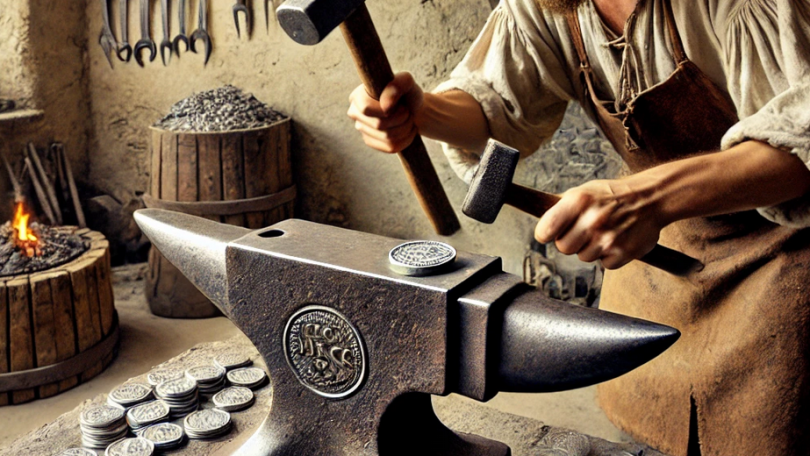
One of the most significant aspects of the James I half groat is that it was a “hammered” coin. This refers to the method of striking the coin, which was done by hand using a hammer and die. The process was relatively simple yet labor-intensive. A metal blank (known as a flan) was placed between two dies and struck with a hammer, imprinting the design onto the coin. This process often led to slight irregularities in the coins, meaning that each one was unique in its own way.
Hammered coins like the half groat were struck until the early 17th century, when the introduction of milled (machine-struck) coinage began to replace them. The transition from hammered to milled coins marked a significant change in the way coins were produced, moving away from the artisanal methods of the past toward a more industrialised system.
For numismatists, the hammered coins of James I offer a glimpse into the craftsmanship of the era, as well as the economic and political climate of the time. The uneven strike, the slight variations between coins, and the wear that comes with centuries of circulation all contribute to the charm and historical significance of these pieces.
Collecting the Half Groat of James I
For collectors, the half groat of James I is a highly sought-after coin, prized for its historical context and aesthetic appeal. As with many hammered coins, the condition of the coin can greatly affect its value. Well-preserved examples, especially those with clear and sharp detail, can fetch significant sums at auction. However, even worn examples have value, as they serve as tangible links to a fascinating period in British history.
The half groat of James I is more than just a coin; it is a window into a transformative period in English history. From the union of England and Scotland to the changes in coinage, this small silver coin tells a larger story of power, politics, and economy during the early 17th century. For collectors and history enthusiasts alike, the James I half groat offers a fascinating glimpse into the past, capturing the essence of a reign that helped shape the future of Britain.